The site was created to bring together the history, gemmology, geography, research and market knowledge surrounding Mahenge spinel in one place.
Our aim is simple: to build a resource that is useful whether you are discovering Mahenge spinel for the first time, researching a particular stone, sourcing for jewellery, building a collection or working professionally within the gemstone trade.
Mahenge has become one of the most important names in modern spinel, yet reliable information about the origin is often scattered across laboratory publications, field reports, dealer websites, auction descriptions and historical articles.
MahengeSpinel.com exists to organise that information more clearly.
Why Mahenge spinel?
Few gemstone discoveries have influenced the modern perception of spinel as dramatically as Mahenge.
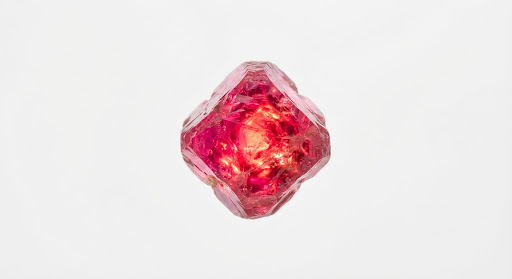
Spinel had been produced around Mahenge before 2007, but the recovery of enormous pinkish-red crystals from the Ipanko/Epanko area that year brought international attention to the Tanzanian locality.
The stones that followed helped establish Mahenge as a source associated with vivid pink, pinkish-red and red spinel displaying exceptional transparency and brilliance.
But there is much more to the story than colour.
Mahenge has an interesting geological setting, a longer mining history than is sometimes acknowledged, multiple spinel-producing localities and a growing body of gemmological research.
That combination makes it a subject worth documenting properly.
A reference first
Although selected Mahenge spinels may be offered through the site, MahengeSpinel.com is designed first as a specialist reference.
Educational pages are not written simply to support a gemstone sale.
Where a claim can be supported by recognised research, we aim to link directly to that evidence.
Sources used throughout the site may include organisations and publications such as:
- the Gemological Institute of America (GIA)
- the Swiss Gemmological Institute SSEF
- Gem-A and The Journal of Gemmology
- peer-reviewed scientific research
- geological and government sources
- documented field observations
We favour primary and authoritative sources wherever they are available.
Trade terminology can also be useful, but it is treated differently from laboratory or scientific terminology.
Words such as neon, electric, hot pink and even certain commercial colour descriptions can help communicate how a gemstone looks, but they should not be confused with standardised gemmological grades.
Our aim is to make that distinction clear.
Documented fact, interpretation and opinion
Gemstones rarely fit neatly into simple descriptions.
Colour changes with lighting. Photographs can alter appearance. Origin conclusions can depend on multiple forms of evidence. Treatments may require specialist laboratory testing to detect. Historical accounts can also disagree on details.
For that reason, MahengeSpinel.com aims to distinguish between:
Documented fact — information supported by laboratory reports, published research, field studies or reliable historical sources.
Observation — characteristics visible or recorded for an individual gemstone.
Trade terminology — language commonly used by dealers, collectors and jewellers.
Interpretation or opinion — judgements relating to beauty, quality, rarity or desirability.
That separation matters.
A gemstone should not be presented as something it cannot be demonstrated to be.
Who is behind MahengeSpinel.com?
MahengeSpinel.com was founded by Carl Ashfield, a UK-based coloured gemstone dealer with a particular interest in exceptional natural gemstones and their origins.
Carl also operates Royal Emeralds, through which he works with fine coloured gemstones and clients looking for loose stones and bespoke jewellery.
MahengeSpinel.com developed from the same fascination with origin, rarity and the individual character of natural gemstones.
Rather than treating Mahenge spinel as simply another product category, the intention is to build a dedicated resource around the origin itself.
That means researching the mines and localities, studying published gemmological literature, documenting individual stones and gradually creating a deeper archive as the site develops.
Selected Mahenge spinel stock
A small number of Mahenge spinels may be offered through our Current Stock section.
We deliberately keep this separate from the educational purpose of the site.
Every publicly listed gemstone should represent a genuine stone that we own, control, hold on memo or are authorised to offer.
Where information is available, listings may include:
- carat weight
- dimensions
- shape and cut
- colour description
- stated origin
- treatment information
- independent laboratory documentation
- images and video
- price or availability
If a detail has not been established, we would rather leave it unstated than invent certainty.
View Current Mahenge Spinel Stock →Independent laboratory reports
For important gemstones, independent laboratory reports can provide valuable information regarding identity, detectable treatment and, where the evidence supports it, geographic origin.
A dealer's description and a laboratory conclusion are not the same thing.
Where a stone carries an independent report, we aim to state the laboratory clearly. Buyers should also understand what the report does — and does not — establish.
No laboratory report can replace looking at the individual gemstone itself.
Colour, cut, transparency, proportions and overall character remain qualities that must ultimately be judged stone by stone.
Corrections and improving the reference
MahengeSpinel.com is intended to develop over time.
Gemstone research evolves. New deposits are discovered. Laboratories improve analytical techniques. Historical information can be clarified as additional records become available.
If you are a gemmologist, researcher, miner, cutter, dealer or collector and believe something on the site is inaccurate or could be better documented, we welcome constructive corrections.
Where a factual error is identified, our preference is to correct it rather than defend it.
Likewise, if you have documented Mahenge material, historical photographs, mine information or research that could contribute to the archive, we would be interested to hear from you.
A specialist resource for one remarkable origin
MahengeSpinel.com does not attempt to cover every gemstone.
Its focus is deliberately narrow.
Mahenge. Tanzania. Spinel.
By concentrating on one important origin, our goal is to build something deeper than a conventional gemstone category page: a growing reference covering the stones, the science, the landscape, the history and the people connected with one of the most significant spinel sources of the modern era.